

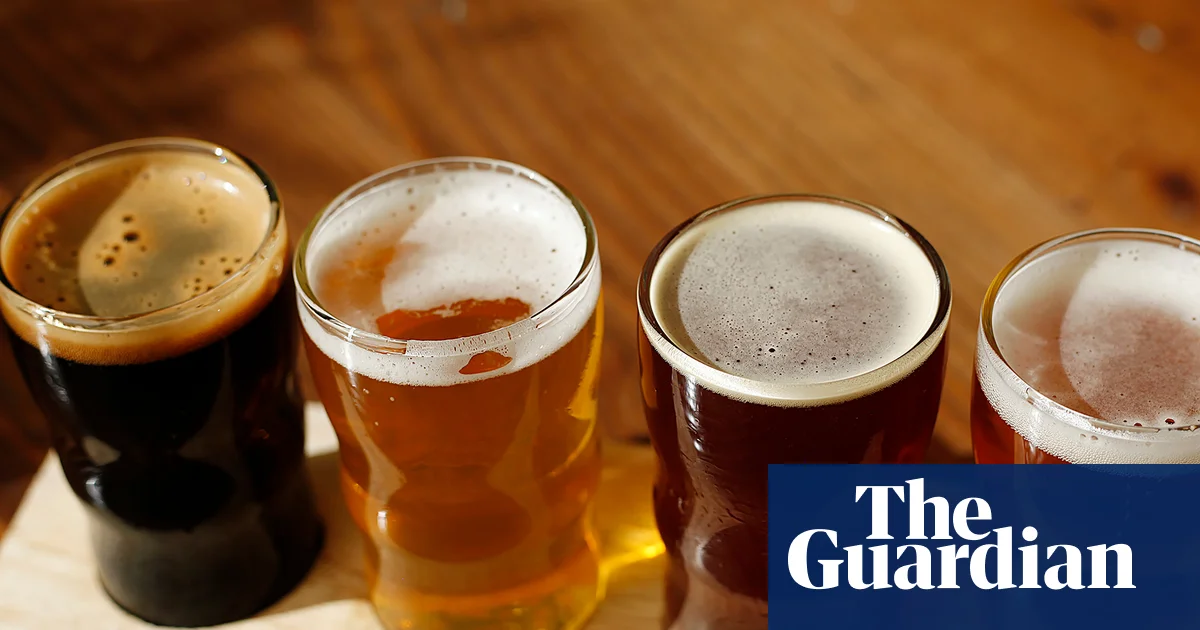
There is nothing like discovering something for yourself to engender a fierce sense of loyalty, and that’s exactly what happened a decade ago when I fell upon the Kernel Brewery’s Table Beer, a pale ale of roughly 3% ABV. This is a brew that never fails to meet me where I am as a working parent with multiple identities but one brain, who often craves a delicious little buzz without loss of function.
Kernel brewer Evin O’Riordain tells me that sales have steadily increased over the past decade, and that 2026 has seen a tipping point. “For the first time ever, Table Beer became the thing we made the most,” he says. This is entirely consistent with the population’s collective interest in no-lo drinks, although, when it comes to beer, zero-alcohol examples are much better represented than low-alcohol ones (in the major retailers, at least). There are only a handful of the latter available in supermarkets, including Small Beer’s 2.3% IPA, Jiddler’s Tipple’s 3.8% Everyday Pale Ale (both Ocado), and Beavertown Satellite (2.8%) and Dark Star’s Hophead (3.4%), both at Waitrose.
So what makes a good super-session beer? Flavour and body tend to be sacrificed when alcohol is reduced or removed, so maintaining those is key. With Table Beer, O’Riordain says he was trying to emulate traditional British cask beers, albeit using “clean and neutral” American yeasts instead of “spicier” English ones, so the bright, New World hops can shine through. The result is a citrussy flavour profile (in a classic IPA, says O’Riordain, the alcohol catalyses the flavour of the hops distinctly, often becoming more tropical).
Texture, meanwhile, results from residual sugar. When he mashes the beer (the process of mixing crushed grain with hot water to activate the natural enzymes that convert starches into fermentable sugars), O’Riordain does so at very high temperatures, disabling the yeast from converting all of the sugar into alcohol. The result is a beer that has the satisfying body of something stronger. A second fermentation in bottle (rather than a forced carbonation, as many breweries do) “also adds a layer of depth”, he says, even though this does increase the alcohol, but only by about 0.2%.
Beavertown describes its Satellite beer as a “super session”, and most beers in that group pitch themselves as supreme session beers – although the Table Beer moniker implies something to drink with food. Always one to refer to past examples, O’Riordain says his research revealed “a whole family of low-alcohol British beers made in the 1700-1900s that were grouped together less by style than by ABV”. These included “boys bitter”, “dinner ale”, “mild beer” and, yes, “table beer”. “Strangely, the lower-alcohol things were more appropriate with food,” he says. All my picks this week are great with flavourful foods; I drank them variously with fish tacos, mattar paneer and donburi. They aren’t just good low-alcohol beers, though; they’re really excellent beers full stop.
Four beers for a proper session
Table Beer £3.25 (330ml) The Kernel Brewery, about 3%. My go-to beer, day or night, food or none; for ever and ever, amen.
Beavertown Satellite Super Session IPA £6.50 (4 x 330ml) Waitrose, 2.8%. Refreshing and soft, fruity and swiggable; eke out the sunshine with one in hand.
Dark Star Brewing Co Hophead Golden Ale £2.75 (500ml) Waitrose, 3.4%. The highest ABV here, which comes through in the body, plus there’s an amazing hoppy kick to finish.
Small Beer IPA £3 (330ml) Ocado, 2.3%. Golden, ultra-low ABV number from a brewery that specialises in “mid-strength” brews.